Radiant Floor Heating in Longmont, CO
Step onto a warm floor on a January morning. We design, install and service hydronic radiant heating for single rooms, additions and entire homes across the Front Range.
The Most Comfortable Heat a Longmont Home Can Have
Front Range winters are long, and forced-air heat has a way of leaving floors cold even when the thermostat says the room is warm. Radiant floor heating solves that from the ground up. Warm water circulates through tubing beneath the floor, and the floor itself becomes the heat source, warming people and furniture directly instead of just the air near the ceiling.
The result is a different kind of comfort. No drafts, no hot and cold spots, no fan noise, and no dust or allergens blowing around the house, which matters in a climate as dry as ours. Because the warmth is where you are, most homeowners find they can run the thermostat a little lower without feeling it, and a well-designed system runs efficiently season after season.
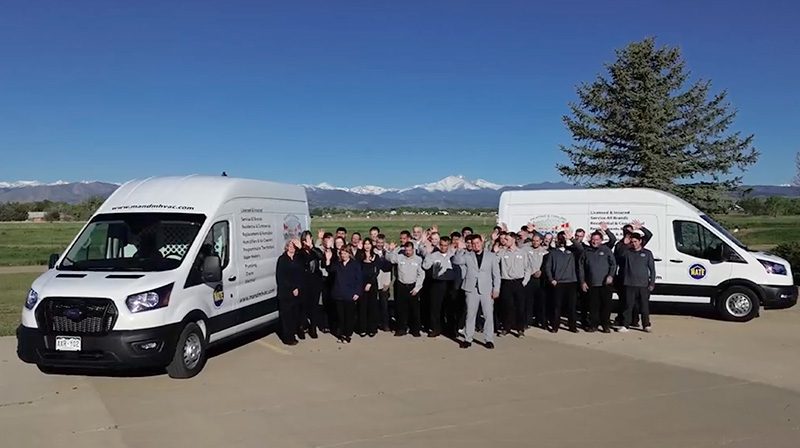
M&M Heating, Cooling, Plumbing & Electrical has designed and installed radiant floor heating in Longmont and the surrounding communities since 1996. Our licensed, insured technicians handle the full project: the heat source, the manifolds and tubing, the controls and the connection to your existing heating system. We work in new construction, additions and existing homes, and radiant pairs well with tile, hardwood, laminate and even carpet when the floor is designed for it.
We also service and repair existing radiant systems, from cold zones and circulator failures to boiler issues. Every project comes with upfront pricing, financing on new equipment and our One Year Test Drive. Not sure whether radiant is right for your space? Ask. We will give you a straight answer.
Where Radiant Floor Heating Works Best
Radiant can heat a whole house or a single cold room. These are the projects where it makes the biggest difference.
Bathrooms and Tile Floors
Tile is the coldest surface in the house on a winter morning and the best conductor of radiant warmth. A heated bathroom floor is the single most requested radiant project we do.
- Warm tile underfoot
- Dries floors faster
- Silent operation
- Ideal for remodels
Basements
Finished basements in Longmont sit on cold concrete and are hard to heat evenly with ducts from upstairs. Radiant tubing in or over the slab turns the coldest level of the house into the coziest.
- Heats from the slab up
- No ductwork needed
- Works with carpet or LVP
- Even temperature wall to wall
Additions and Remodels
An addition often strains the existing furnace and ductwork. Radiant heats the new space independently with its own zone and thermostat, without upsizing the furnace or running new ducts.
- Independent zone control
- No new ductwork
- Frees up wall space
- Pairs with existing heat
Whole-Home and New Construction
In a new build or a gut remodel, whole-home radiant delivers the most consistent comfort available, with zoned control room by room and no visible equipment anywhere in the living space.
- Room-by-room zoning
- No vents or registers
- Quiet throughout
- Designed from the plans
Garages and Workshops
A heated garage slab keeps the space usable all winter, melts snow off the car and keeps tools and stored items free of condensation. It is also gentle on the concrete compared to a blasting unit heater.
- Usable space year-round
- No fumes or fan noise
- Melts tracked-in snow
- Protects stored items
Existing Radiant Systems Needing Service
Already have radiant and one zone has gone cold, the floor takes forever to warm, or the boiler is acting up? We diagnose and repair circulators, zone valves, manifolds, mixing valves and controls on all systems.
- Cold zone diagnosis
- Circulator and valve repair
- Air purging and balancing
- Boiler repair and replacement
The M&M Difference
Radiant heating is a design project as much as an installation. Here is why Front Range homeowners trust ours.
Designed Around Your Floors and Rooms
Tubing layout, loop lengths, water temperature and zoning are engineered for your specific floor coverings and heat loss, not pulled from a generic template. That is what makes the difference between warm and barely warm.
Heating and Plumbing Under One Roof
Radiant is a hydronic system, which means boilers, pumps, manifolds and piping. As a licensed heating and plumbing company, we handle the whole job in-house rather than coordinating subcontractors.
One Year Test Drive
New radiant installations are new equipment, and that means our One Year Test Drive applies. If you are not 100% happy within the first year, we make it right. Conditions may apply.
Honest About Fit and Cost
Radiant is not the right answer for every room or every budget. We give you a clear upfront price, explain the tradeoffs versus other options and let you decide. Financing is available on new equipment.
Our 4-Step Process
From a conversation about cold floors to warm feet, here is how a radiant project works with M&M.
In-Home Consultation
We look at the space, the floor construction and coverings, your existing heating system and your goals, then talk through whether radiant is the right fit and what it would involve.
System Design and Upfront Price
We design the tubing layout, zoning, heat source and controls, and present a written price with financing options. You see exactly what is included before you commit.
Installation
Our crew installs the tubing and manifolds, connects the heat source and controls, pressure-tests every loop and coordinates with your flooring installer or contractor as needed.
Startup, Balancing and Walkthrough
We fill and purge the system, balance the zones, set water temperatures for your floor types and show you how the thermostats work. Then you get to enjoy the warmest floors on the block.


Radiant Floor Heating Questions
How does radiant floor heating work?
A boiler or other heat source warms water, and a circulator pump moves it through flexible tubing installed beneath the floor, either in a concrete slab, in a thin overpour, or in panels under the subfloor. The warm floor radiates heat upward to the objects and people in the room, the same way the sun warms you on a cool day. Each zone has its own thermostat, and the system runs quietly with no moving air.
Can radiant floor heating be added to an existing home?
Yes. Retrofits are common, especially in bathrooms, basements and additions. In a bathroom remodel, tubing goes in before the new tile. In a basement, it can be installed over the existing slab under a new floor. Under hardwood on an upper floor, we can install panels from below in some cases or use a low-profile system above the subfloor. We will look at your construction and tell you which approach fits.
Is radiant floor heating efficient?
Generally, yes. Radiant heats the floor and the objects in the room rather than the air, so warmth is felt at a lower thermostat setting, and there is no heat lost through leaky ductwork. Water also carries heat far more efficiently than air. Actual savings depend on the heat source, the floor construction and how the home is insulated, and we will give you a realistic picture rather than a sales number.
What flooring works with radiant heat?
Tile and stone are the best conductors and feel the warmest. Engineered hardwood, laminate and luxury vinyl plank work well when rated for radiant use. Carpet works with a thin pad, though it insulates the floor somewhat. Solid hardwood needs careful water-temperature control to avoid movement. We design the system around your floor choice, so tell us what you are planning before the tubing goes in.
Does radiant floor heating require maintenance?
The tubing itself is sealed and essentially maintenance-free. The mechanical side, meaning the boiler or water heater, circulator pumps, expansion tank, mixing valves and controls, should be inspected annually like any heating system. Hard water on the Front Range makes checking the heat source especially worthwhile. We can set up a yearly service visit so the system keeps performing the way it did on day one.
Do I need a boiler for radiant floor heating?
Most whole-home and multi-zone radiant systems use a boiler, and condensing boilers are a particularly good match because radiant runs at low water temperatures. Smaller systems, such as a single bathroom, can sometimes be served by a dedicated water heater. We size the heat source to the system and, if you already have a boiler, will evaluate whether it can take on the new zone.
Ready for Warm Floors This Winter?
Open 24/7 | Emergency Service Available
Call (720) 608-3973Radiant Floor Heating Across the Front Range
Proudly serving Longmont, CO and surrounding communities.
Primary Service Area
- Longmont, CO
- Erie, CO
- Frederick, CO
- Firestone, CO
- Dacono, CO
Extended Area
- Mead, CO
- Johnstown, CO
- Berthoud, CO
- Niwot, CO
- Gunbarrel, CO
Also Serving
- Lafayette, CO
- Louisville, CO
- Superior, CO
