Sewer Camera Inspection in Longmont, CO
A fiber-optic camera shows you what is really inside your sewer line, then we locate the problem from the surface and mark its depth. No guessing, no unnecessary digging.
See Inside Your Longmont Sewer Line Before You Pay to Fix It
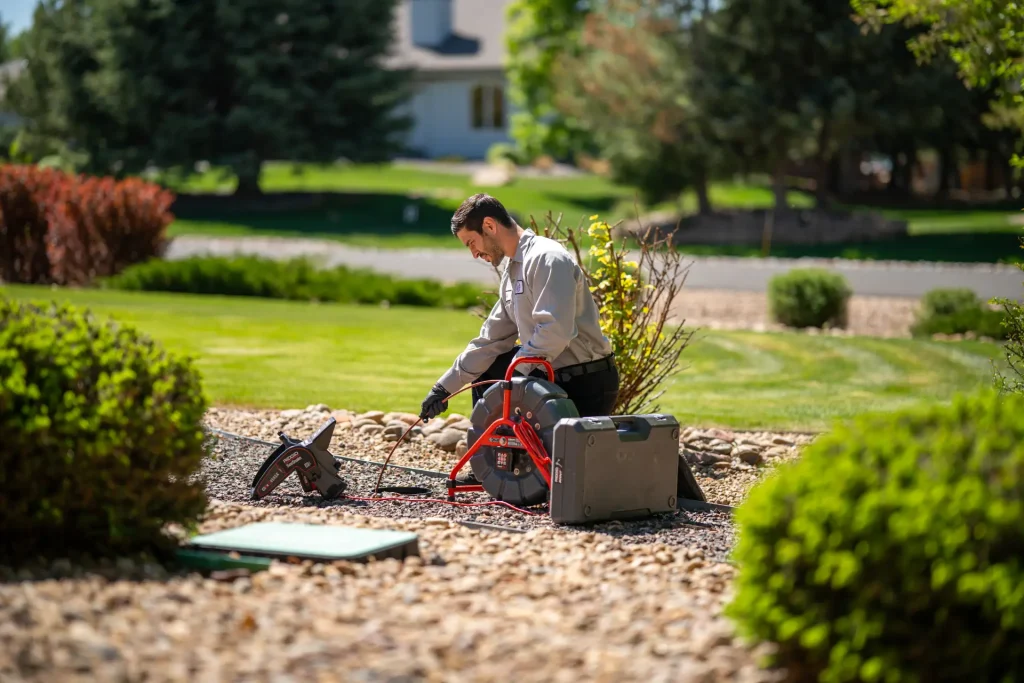
Guessing at what is wrong with a sewer line gets expensive fast. A sewer camera inspection takes the guesswork out. Our technicians feed a waterproof fiber-optic camera through a cleanout and down the line, sending live video to a monitor above ground while the entire run is recorded. You see what we see: roots, cracks, offset joints, bellies, grease buildup or a collapsed section.
The camera head also carries a locating transmitter. As it travels, we track it from the surface with a receiver that pinpoints the position of any problem and establishes its depth below grade. Instead of “somewhere under the front yard,” you get a marked spot and a measurement. That precision is what keeps a spot repair small and keeps a trenchless job from turning into a dig.
In Longmont and across the Front Range, camera inspections answer the questions homeowners bring us every week: why does this drain keep backing up, is the line under the driveway sound, and should I buy this house. Recurring main-line clogs almost always have a structural cause that a cable cannot fix. The camera finds it.
Every inspection includes recorded footage you can keep, a plain-English explanation of what it shows and upfront pricing on any work we recommend. If the line looks healthy, we will tell you that too. Ask about our drain clearing special, which includes a camera inspection.
What a Sewer Camera Inspection Reveals
Most sewer problems are invisible from inside the house. These are the situations where seeing the pipe pays for itself.
Recurring Clogs & Backups
If the main line backs up every few months no matter how often it is snaked, cabling is treating a symptom. The camera shows whether a root mass, belly, broken pipe or buildup is causing the repeat visits.
Tree Root Intrusion
Mature trees in Longmont's established neighborhoods send roots straight into the joints of older clay sewer pipe. On camera we can see how far the roots have spread and whether the pipe wall around them is still intact.
Bellies & Low Spots
When expansive clay soil settles, a section of pipe sags and holds standing water. Bellies show up clearly on video as a stretch where the camera dips below the waterline, and locating tells us exactly where to correct it.
Cracks, Breaks & Offset Joints
Hairline cracks, separated joints and crushed sections let soil in and sewage out. These are the defects that eventually cause a collapse, and the camera catches them while a smaller repair is still an option.
Pre-Purchase Home Inspections
A standard home inspection does not include the sewer line. A camera inspection before closing tells you whether you are inheriting a sound pipe or a replacement project, and gives you footage to bring to the negotiating table.
Post-Repair Verification
After hydro jetting, lining or a spot repair, a follow-up camera pass confirms the line is clear, sealed and flowing the way it should. You see the before and after, not just an invoice.
The M&M Difference
A camera inspection is only as useful as what you do with the findings. Here is how we handle them.
Fiber-Optic Clarity
Our video cameras are built for sewer lines, with lighting and resolution that make cracks, root hairs and joint offsets easy to see on the monitor and on the recording.
Located & Measured from the Surface
The camera's transmitter lets us mark the exact position and depth of a problem above ground, so any repair is targeted to the right spot and nothing more.
You Keep the Footage
The inspection is recorded and the footage is yours, whether you use it to compare options, share with a seller or buyer or keep on file for the future.
Findings Without Pressure
We explain what the video shows and give upfront pricing on any recommended work. A healthy line gets a clean bill of health, not a sales pitch. Family-owned since 1996.
Our 4-Step Process
Most residential inspections are finished in a single visit.
Access the Line
We locate the cleanout, usually outside the home or in the basement, and confirm the line is open enough for the camera. If the main is fully blocked, we clear it first so the camera can travel the full run.
Run & Record
The camera travels the length of the line while live video streams to the monitor and the full inspection is recorded. We note the distance from the cleanout to every defect as we go.
Locate & Mark
Using the camera's transmitter, we trace the pipe from the surface, mark the position of any problem and establish its depth. This is the information a repair estimate is built on.
Review Your Options
We walk you through the footage, explain what each finding means and lay out your options, from leaving the line alone to clearing, trenchless repair or replacement, each with upfront pricing.


Sewer Camera Inspection Questions
What problems can a sewer camera inspection detect?
The camera reveals nearly anything wrong inside the pipe: tree root intrusion, cracks and fractures, separated or offset joints, bellies that hold standing water, grease and scale buildup, foreign objects, corrosion in cast iron and partial or full collapse. It also identifies the pipe material, which matters when deciding between lining, bursting and excavation.
Can you tell me exactly where the problem is and how deep?
Yes. The camera head transmits a signal that we track from above ground with a locating receiver. That gives us the position of the defect on your property and its depth below the surface. We mark it on the ground so any repair, trenchless or traditional, is confined to the right spot instead of a long exploratory dig.
Should I get a sewer camera inspection before buying a home in Longmont?
We strongly recommend it, especially for homes built before the 1980s where clay or cast iron sewer lines and mature trees are common. A general home inspection does not look inside the sewer line. A camera inspection is quick, gives you recorded footage and can turn a hidden replacement into a negotiated repair or credit before closing.
Do I get a copy of the inspection video?
Yes. Every inspection is recorded and the footage is yours to keep. Homeowners use it to compare repair estimates, document the condition of the line for a real estate transaction or simply hold onto it as a baseline for future inspections.
My drain keeps clogging. Why not just snake it again?
A cable clears the blockage in front of it and nothing more. If roots, a belly or a cracked pipe keep catching debris, the clog will return and you will keep paying for the same service. A camera shows the cause so you can fix it once. That is why our drain clearing special includes a camera inspection on the main line.
Can you run the camera if the line is completely backed up?
Not until it is open. A camera cannot see through standing sewage, so a fully blocked main needs to be cleared with a cable or hydro jetting first. We then run the camera immediately afterward, while the technician is already on site, to find out why the line blocked in the first place.
Want to See What's Really Inside Your Sewer Line?
Open 24/7 | Emergency Service Available
Call (720) 608-3973Sewer Camera Inspections Across the Front Range
Proudly serving Longmont, CO and surrounding communities.
Primary Service Area
- Longmont, CO
- Erie, CO
- Frederick, CO
- Firestone, CO
- Dacono, CO
Extended Area
- Mead, CO
- Johnstown, CO
- Berthoud, CO
- Niwot, CO
- Gunbarrel, CO
Also Serving
- Lafayette, CO
- Louisville, CO
- Superior, CO
