
Drain Line & Slab Leak Repair in Longmont, CO
Sewer odors, damp floors and cracks that keep spreading usually trace back to a broken drain line. We find the exact spot, then fix it without tearing up more than we have to.
Drain Line Repair in Longmont: Fixing the Leaks You Can Smell but Can't See
Water supply leaks announce themselves with a hiss in the wall or a bill that jumps. Drain line leaks are sneakier. A cracked drain pipe only leaks while a fixture is running, so the damage builds in short bursts, hidden under a basement slab or behind a finished wall, until you notice a sewer smell, a damp patch that keeps coming back or a crack in the floor that was not there last year.
M&M repairs leaking and broken drain lines throughout Longmont and the Front Range, from a single rotted kitchen branch to a cast iron main running beneath the basement floor. Many homes here built in the 1960s and 70s still drain through original cast iron that corrodes from the inside out, and the expansive clay beneath them shifts enough to crack joints and open gaps. Once wastewater escapes under a slab, it washes away the soil that supports the concrete, which is how a plumbing problem turns into a foundation problem.
We find the leak before we open anything. Camera inspection, isolation testing and electronic locating tell us which section has failed and how deep it sits, so the repair stays small and targeted. Then we lay out your options with upfront pricing: a spot repair, a reroute, lining the damaged run or replacing it.
Suspect a pressurized water line instead? Our leak detection team handles supply-side leaks. Not sure which one you have? Call, and we will sort it out on site.
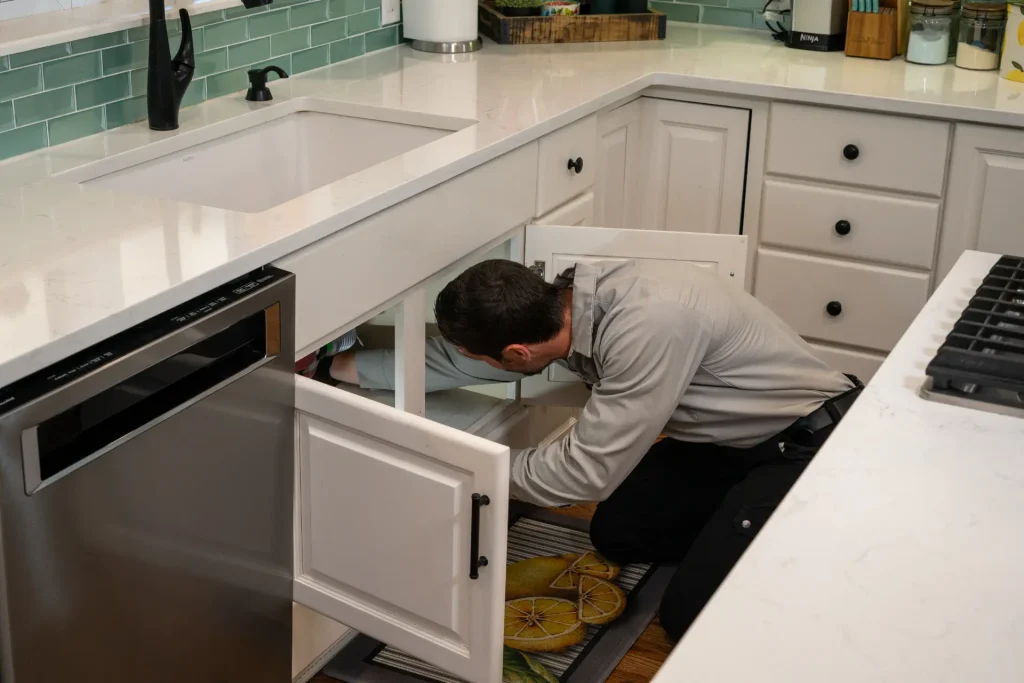
Symptoms Longmont Homeowners Notice First
Drain leaks rarely show up as a puddle. They show up as smells, stains and slow changes to the house itself.
Sewer Gas or Musty Odors
A persistent rotten-egg or musty smell in a basement, bathroom or utility room means wastewater is escaping somewhere it should not. Odors that get stronger after showers or laundry point squarely at a drain line.
Damp Floors, Walls or Carpet
Moisture that appears along the base of a wall, in a floor seam or in one corner of a finished basement, dries out and then returns, follows the rhythm of your drains. That cycle is the signature of a leaking drain pipe.
Slow Drains With No Clog
When a drain pipe breaks, surrounding soil washes in and roots follow. Fixtures drain slowly, a cable comes back clean and the problem returns anyway. The pipe itself, not a blockage, is the issue.
Foundation & Slab Cracks
Wastewater leaking under a slab erodes the soil beneath it and swells the clay around it. New cracks in a basement floor, doors that stick or a section of slab that sounds hollow can all trace back to a failed under-slab drain.
Mold, Mildew & Drain Flies
Chronic moisture from a drain leak feeds mold behind baseboards and drywall and gives drain flies and other pests a breeding ground. If mold keeps returning after cleanup, the water source is still active.
Wet Crawl Space or Yard Over the Line
A soggy patch of lawn, unusually green grass or standing water in a crawl space along the path of a drain line usually means the pipe is discharging into the soil instead of the sewer.
The M&M Difference
A drain line repair should fix the pipe, not wreck the house around it.
Located, Not Guessed
We pinpoint the failed section with camera inspection, isolation testing and electronic locating before we cut concrete or open a wall. The repair happens where the leak is, not where we think it might be.
Least Invasive Repair First
Spot repairs, reroutes and lining are on the table before full replacement. We recommend the option that solves the problem for the long term with the smallest footprint in your home.
Upfront Pricing, No Surprises
You see the footage, hear the options and get a firm price before work starts. No change orders sprung on you halfway through a slab repair.
24/7 With No Overtime Charge
Sewage in a basement does not wait for business hours. We are open around the clock with no extra charge for nights or weekends, backed by a 100% satisfaction guarantee. Family-owned since 1996.
Our 4-Step Process
Find it precisely, fix it once, put your home back the way we found it.
Pinpoint the Leak
We run a camera through the drain line, test sections to confirm where wastewater is escaping and use the camera's locator to mark the exact position and depth on your floor or yard.
Explain Your Options
You see the footage and get a clear explanation of what failed and why. We walk through repair paths, from a spot repair or reroute to lining or replacing the run, each with upfront pricing.
Make the Repair
We open only the marked area. For under-slab leaks that means cutting a targeted section of concrete, replacing the damaged pipe, compacting the backfill and patching the slab. Walls and floors above are protected throughout.
Test, Verify & Restore
We flow water through the repaired line, run the camera again to confirm it is sealed and draining properly, then clean up and restore the work area before we leave.


Drain Line & Slab Leak Repair Questions
How is a drain line leak different from a water line leak?
Water lines are pressurized and leak continuously, which is why they often show up on your water bill. Drain lines carry wastewater by gravity and only leak while a fixture is in use, so the symptoms are odors, intermittent dampness and slab or soil problems rather than a running meter. Both can occur under a slab, and we handle both, but they call for different testing and repair methods.
What is an under-slab drain leak and how do you repair it?
It is a crack, break or corroded-through section in a drain pipe buried beneath your basement or garage floor. We locate it with a camera and surface locator, cut a targeted opening in the concrete directly above the failure, replace the damaged pipe, compact the fill and patch the slab. When the damaged run is long, lining or rerouting the line may avoid cutting the floor altogether.
Do you have to break through my basement floor?
Not always. If the damaged section can be lined from an existing cleanout, or if the line can be rerouted through a wall or above the slab, the floor may not need to be opened. When cutting concrete is the right answer, precise locating keeps the opening small and confined to the failed section, and we patch it when the repair is done.
Can a leaking drain line really damage my foundation?
Yes, and the Front Range's expansive clay makes it worse. Escaping wastewater erodes the soil that supports a slab while saturating the surrounding clay, which swells, then shrinks as it dries. That cycle produces floor cracks, uneven settling and doors that bind. Repairing the drain early is far less expensive than repairing the foundation it is undermining.
Why would my drain be slow if there is no clog?
A broken drain pipe lets soil and roots into the line and lets water out, which reduces the pipe's capacity even when nothing is stuck in it. A cable may pull back clean and the drain still runs slow. A camera inspection distinguishes a true clog from a damaged pipe so you pay for a repair, not a series of clearings that cannot work.
Should I repair or replace an old cast iron drain line?
It depends on what the camera shows. A single corroded fitting or cracked section in otherwise solid pipe is a good spot repair. Cast iron that is scaling, channeled along the bottom or failing in several places is usually better replaced or lined as a run, since repeated spot repairs add up. We show you the condition of the whole line and give pricing for both approaches so you can decide.
Smell It, See It or Suspect It? Let's Find the Leak.
Open 24/7 | Emergency Service Available
Call (720) 608-3973Drain Line Repair Across the Front Range
Proudly serving Longmont, CO and surrounding communities.
Primary Service Area
- Longmont, CO
- Erie, CO
- Frederick, CO
- Firestone, CO
- Dacono, CO
Extended Area
- Mead, CO
- Johnstown, CO
- Berthoud, CO
- Niwot, CO
- Gunbarrel, CO
Also Serving
- Lafayette, CO
- Louisville, CO
- Superior, CO
